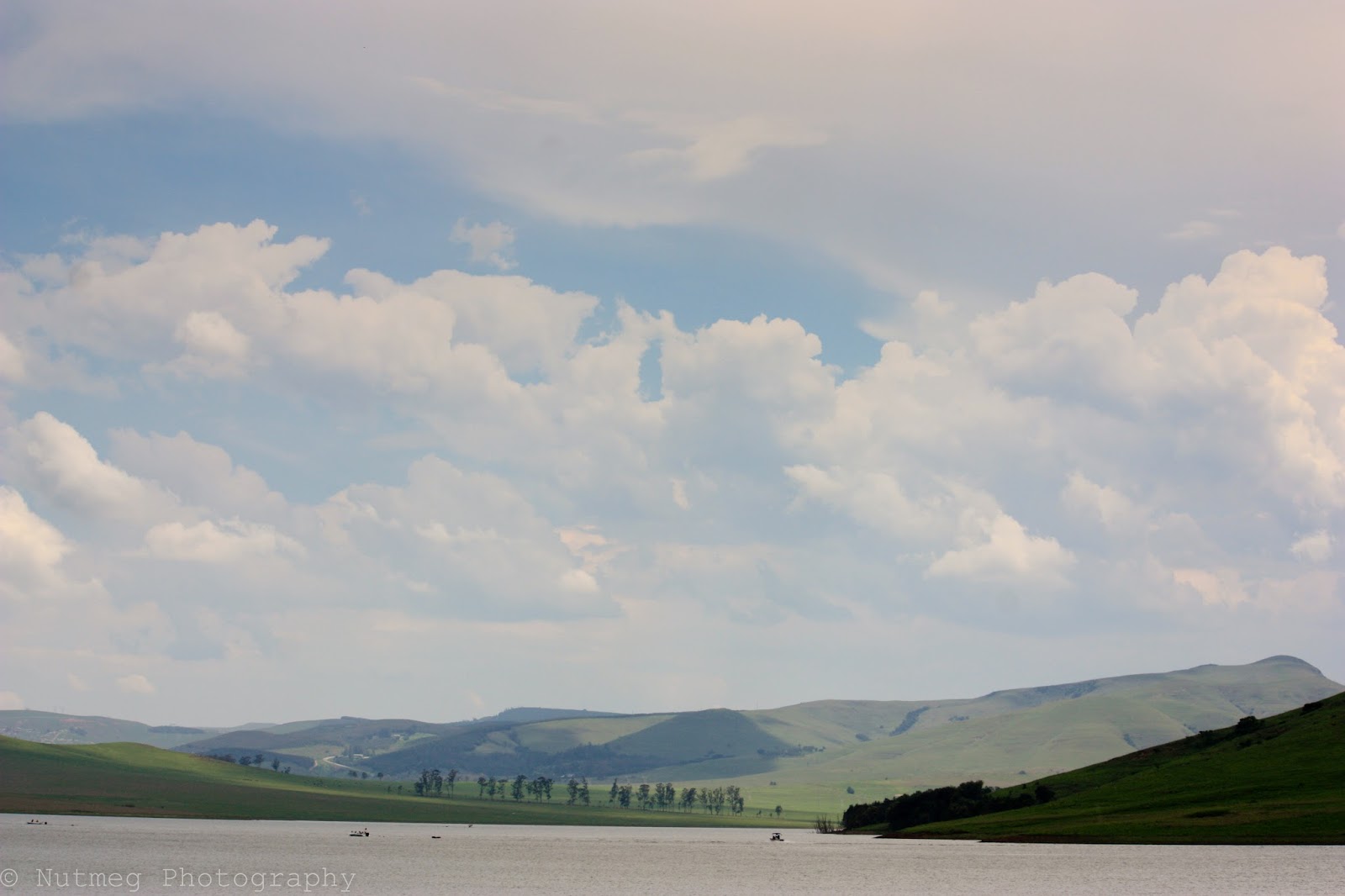
Apart from friends and family, the scenery and animals are what I miss most about South Africa. Which probably explains why after almost 24 hours of travelling and only 5 hours sleep when we arrived in SA, I was still able to wake up at 5am to hear the dawn chorus over the rushing water of the river next to our temporary accommodation.
I laughed to hear the crying of the Hadeda Ibis and a shiver ran down my spine when the piet-my-vrous started their insistent long distance conversations. I had forgotten about the Christmas Beetles with their high-pitched whistling squeak that reminds me of walking in forests in summer.
Of course not all the animals were wild. For the duration of our visit we house-sat for some of my sister's friends. They had two dogs; a labrador and a jack russell.

If you were wondering what a Hadeda Ibis was then wonder no more. They have to be the strangest and funniest birds I have ever seen. Every time they take off from the roof of a house (usually at sunrise) their cry sounds like a couple of starving babies. They are the butt of a few jokes, one of which is that they're afraid of heights. I had given myself a couple of photographic challenges for this trip and the second most important was to get a photo of a hadeda that didn't make me laugh or that made the hadeda look at least a little respectable. I don't think this photo ticks that box.
When we moved from Cape Town to Kwa-Zulu Natal, I was only about 4 years old. And none of us had heard of Hadedas. In fact I couldn't get their name right to start with - I used to call them Dadehas.

Anyone ever wonder what happened to Pinocchio? He's having a lovely time bird watching in this tree.

The number 1 photographic challenge I set myself was to get a photo of a Piet-My-Vrou. Well I failed as I knew I would. These red-chested cuckoos are shy and elusive birds, always heard and hardly ever seen, except perhaps as a speck in a distant blue-gum tree. They have become more numerous over the 7 years I've been away and every morning I woke up to the call of the locals. One even teased me. I knew which tree it was in, I stood right under the tree and still couldn't see the silly bird. I could hear him loud and clear "piet-my-vrou, piet-my-vrou" but not a feather could I see. How frustrating. One day I will get a photo of him.

A bird I had forgotten about was the Fork-Tailed Drongo. A completely black bird with, yup you guessed it, a forked tail.

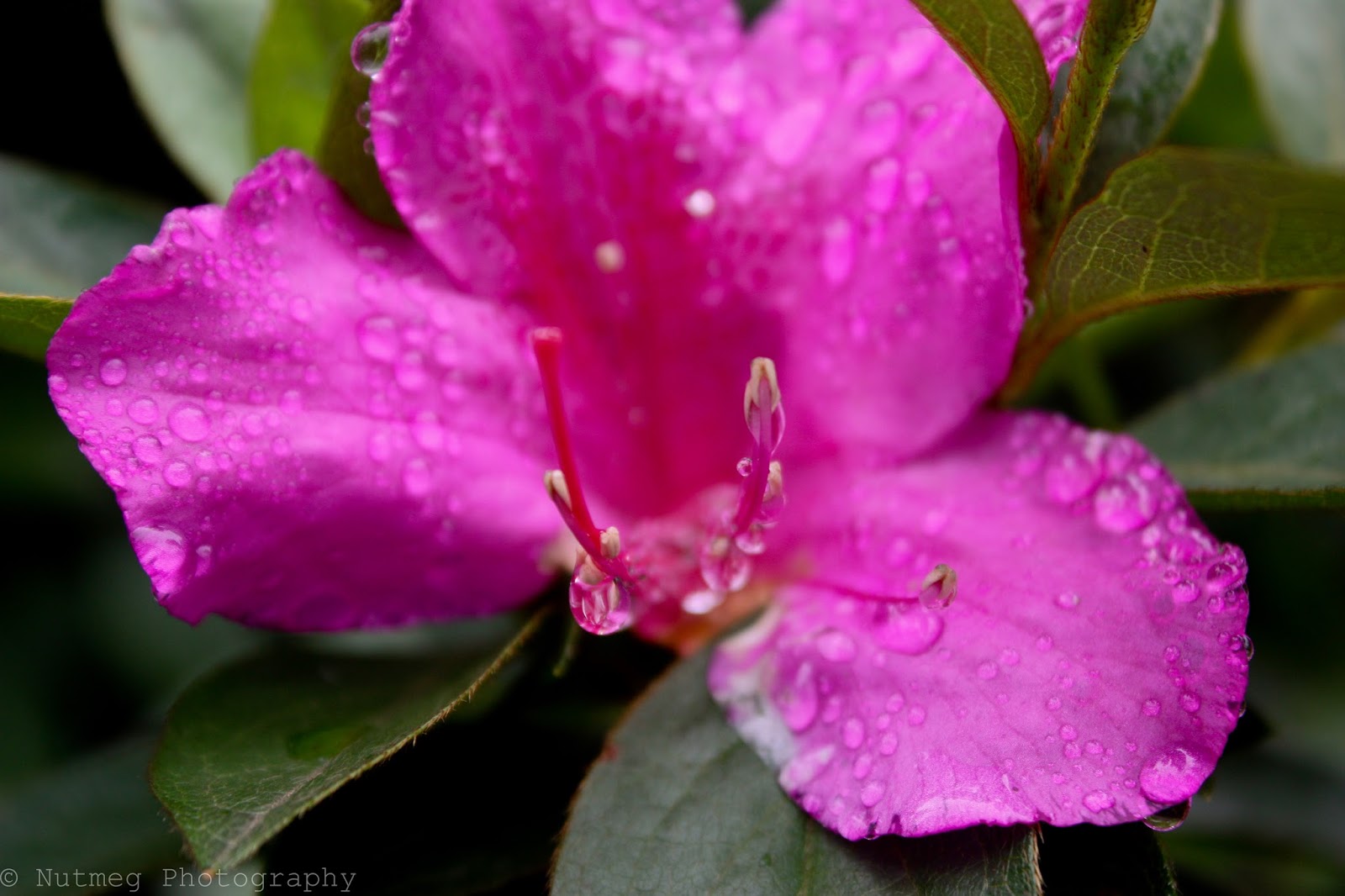
I can't resist a few good flower photos, especially when they include water drops from the recent unseasonal rainy days.


Ah, probably the most numerous species of bird in SA (don't quote me on that), the weaver. There are many types of weavers and all of them build very cool nests that give them their name. They take reeds from a riverbank, or bits of palm trees, whatever they can, and weave together their little cave-like nests for their mates. If the female doesn't like the nest, it gets thrown to the ground to be picked up by curious school children learning about them at school. The last house we stayed in before moving to England had a willow tree at the bottom of the garden. This poor willow never really had a chance to hide its trunk and every reason to weep as the weavers stripped its whip-like branches for their nests.


This little pied wagtail is another cute bird I had forgotten about. He flitted around the river, jumping from rock to rock searching for insects and tadpoles to catch. Once or twice he looked directly at me, knowing I was there but still he carried on, content that I wouldn't get any closer.

He caught what looks like a damsel fly.


It can get very wet, jumping from one rock to another. Sometimes all you need is a little shake to get those cold water drops off your back.

This gap between rocks was a bit too big to just jump over.

Perfectly built for the riverside. He's beautifully camouflaged here.

When we visited the Nelson Mandela Monument outside Howick near the site of his capture, many people had already put down flowers and cards. This bird of paradise with a lily and some other flowers caught my attention and I couldn't help photographing them.

Another special bird on my list of favourite South African birds has to be the pin-tailed whydah. These little birds have long tail feathers which weigh them down a bit in flight, giving the whydah a duck and dive way of flying that is quite comical and beautiful.

These red bishops along with the pintail were grazing behind Piggly Wiggly Farm Stall.

Indian Mynahs are a common enough sight.

This LBJ (little brown job) posed nicely for me while we were waiting for our lunch at a restaurant on the Midlands Meander.

A random beetle landed on my brother's hair, couldn't resist.

It wasn't the season for proteas to flower but this protea bush had at least one flower for me to photograph. The protea is of course South Africa's national flower.

Remember that Hadeda photo I mentioned I wanted earlier? This isn't it. But then again, Hadeda's are comical creatures, so perhaps this is the photo I wanted... "do you feel clucky?"

A Fiscal Shrike or (more commonly) butcher bird. These birds are not nice characters. I remember when we were looking after a little bulbul chick called Wilbur we had to keep the butcher birds away from him while his parents flew down and fed him. So butcher birds will kill other birds, as their name suggests.

Where there's water, you'll find a dragonfly darting backwards and forwards. I watched this one for quite a time before taking the photo. It kept pacing the same route up and down the lawn next to the swimming pool. I was able to follow it on the camera and capture this cool photo.

I missed the bee in this shot by a few seconds but I still like the photo.

Random unopened flower.

A South African Honey Bee with a mean sting.

You want to know the reason I can't tell the different between a British bee and British wasp? Well this is what a South African Wasp looks like. Worse than bees, they live after they sting you. They're also pretty aggressive if you go near their nests. And for some reason these guys like building their nests in the corners of verandahs.

A cute gecko, almost impossible to catch by hand but I have managed it a few times.

A hadeda with a bad hair day?! Also from a distance and on gloomy days hadedas look like boring brown/grey birds, in the sun their feathers shimmer with every colour. Their discarded feathers can be very pretty on a hanging ornament.

A weaver bird in the reads near a man-made dam.

These flowers are usually found in very dry climates, I think. Their tiny petals feel like plastic or paper and they rustle like plastic. We used to call them Everlasting Flowers because they looked like dried flowers.

Some more proteas in a friend's garden.


I had a few birds of prey on my photography challenge list. The Yellow-Billed Kite was not on the list because I had forgotten about him. But here he is, showing off for my camera.


House Martins and Swallows are almost impossible to capture on camera because they're so swift. But this guy I just managed to capture.

The Guinea Fowl. Enough said.

A beautiful Red Bishop.

After a quick bit of research, I have found out that this neat grasshopper is called a Koppie Foam Grasshopper. Koppie is Afrikaans for small head (in this case) and these guys secrete a poisonous foam on their heads when they feel threatened. They are poisonous because of the plants they consume, milkweed being one of those. They're still pretty amazing and this guy didn't feel threatened by me when I was taking pretty close up photos of him.


This is a Bulbul. They have a small sound probably a little similar to the Blue Tit. I have heard them trying to imitate the Piet-My-Vrou in some instances but they are not loud enough to cast their call over the valleys like the Piet-My-Vrou can.

This little guy lives in his nest above the front door of my sister's sister-in-law's house in Hilton, KZN. It's a Lesser Striped Swallow. I felt bad photographing him because I had to use the flash, but he seemed okay with it and flew away quite happily when I was done.


One of the larger birds of prey in South Africa, the Gymnogene or African Harrier Hawk. They are large grey birds. It was always special to see one in Howick and this one was spotted in Pietmaritzburg chased by some swallows.

I just loved the lighting.

Random plant growing on a branch.

One of the more common birds of prey in SA is the Long Crested Eagle. As their name suggests they have long crests which can be quite comical in rainy or windy weather. I remember passing one sitting on a pole with its crest folding over its face and sticking to it's beak after a bad rain storm. Poor thing looked very bedraggled and sorry for itself but we couldn't help laughing. Their long slow whistle call is easily recognised in valleys and near small dams. In flight they are recognised by the white tipped wings (similar to the Common Buzzard in England).

An animal that is equally cute, dangerous and a pest is the Vervet Monkey. These guys used to inhabit the blue-gum trees at the bottom of our garden and at the bottom of the road of our first house in Howick. Sadly because the blue-gums are alien to SA, the government started to get rid of them, thus leaving the monkeys with no place to go. They of course then search for food in local properties and houses. They are really cute though and when we were visiting some old friends (their story to feature in the next blog post) the monkeys turned up to give us a bit of a show. They had really young ones with them but sadly I couldn't photograph those.
This little guy is still quite young. Even though I was taking the photos through an open window, they knew I was there and tried to stay out of sight of my lens.

This one had yet to realise that the branch it was hiding behind wasn't big enough!

The young vervet was a bit more curious and adventurous than the others.


Posing for the camera!


Uncle Nigel decided to tempt the monkeys by putting a banana in the bird feeder. This is something that residents are always asked not to do as it encourages the monkeys... but it's brilliant for a bit of photography!


Swinging from the trees!


Caught in the act.

There were a few other birds I saw or heard but couldn't get photos of. These included the Burchell's Coucal (also known as the rain bird). Not the most pretty birds but surely one of best songs to hear while sitting outside in the morning. Sometimes described as the sound of water bubbling, these birds are similiar to the Piet-My-Vrou in that they are rarely seen but easily heard.
I've always given another bird the name of Rain Bird. It's a bird I don't think I've ever seen because I don't know it's true name. It has one long drawn out whistle that spreads across a valley before rain. It's a beautiful sound to hear. I wish I could find out what it is.